Wednesday, 6 April 2016

Baggio vs Lippi: Anatomy of a Feud

This article first appeared on TheseFootballTimes


The date is December 5th 2011, in the historic headquarters of the FIGC, nestled in the southeastern district of Florence. There is a ceremony in progress inside the Italian football history museum that has become an annual occurrence yet this is the inaugural event. The Italian Football Hall of Fame, an evening celebrating the very best in the distinguished history of calcio.

There are six figures standing side by side posing for photographs; visible are the unmistakable bald domes of Adriano Galliani, Pierluigi Collina and Arrigo Sacchi, and at the end of the row is the former (and now banned) UEFA President Michel Platini. All four are smiling while Collina and Galliani share a laugh together, yet your gaze is directed towards the two individuals sandwiched between Collina and Platini; Marcello Lippi and Roberto Baggio. The pair stare ahead and awkwardly smile, with not even a cursory glance afforded to each other. No jovial laughter here.
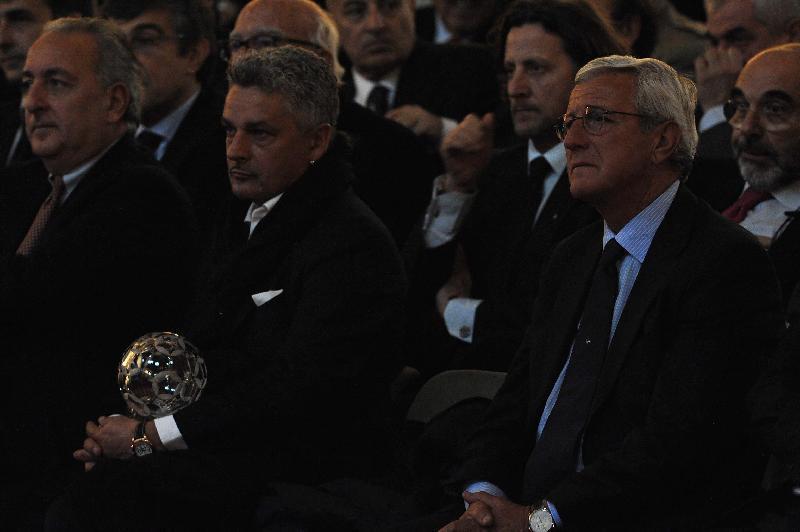
No small talk between these two

One of Italy’s greatest ever coaches and players have a rivalry that is infamous in the annals of the Italian game. It’s a feud that transcends the usual arguments that ensures between coaches and players such as tactics or playing time, this rivalry got very personal. How did it come to this? To find out we have to go back to the summer of 1994; Baggio’s darkest hour.

The feud didn’t begin that summer – that was all to come later - but it was in Turin that they first got acquainted. Baggio had spent the summer being lambasted by the Italian media for missing that penalty in the World Cup Final in Pasadena. ‘’They wanted a lamb to slaughter and they chose me.’’ He would remark about the events of that torturous summer. The Italian public seemingly contracting a collective dose of amnesia in overlooking that it was he who dragged an excruciatingly mediocre Azzurri side to the final in what was the greatest one-man display the tournament had seen since Maradona eight years prior and arguably hasn’t seen since.

Gheorghe Hagi's Remarkable Stint at Brescia

This article first appeared on TheseFootballTimes

There’s something peculiar about Brescia Calcio, or just simply known as Brescia. Founded in 1911 in the quaint but industrial city that is situated in the Lombardy region of Italy. They are oft described as a yo-yo team, yet hold the record for spending more seasons in Serie B than any other.

A young Pirlo...look at them locks

If one looks through their pretty unremarkable history, you will find that in fact some pretty remarkable players have won the biancoazzurro jersey. The most impressive one of course is Roberto Baggio, who brought such unprecedented levels of attention by his mere presence in his four year stint. The bearded genius, Andrea Pirlo, was born in the city and was raised through the primavera set up and made his Serie A debut at the tender age of 16 in May 1995.

Baggio and Pep
Pep Guardiola enjoyed a brief post-Barcelona stint at the Stadio Mario Rigamonti in 2001/02 in a team that featured not only the Divine Ponytail but also future World Cup winner Luca Toni. That’s quite an alumnus.


The most remarkable example however has to be that of one Gheorghe Hagi, Maradona of the Carpathians. Romania’s greatest ever player adorned the jersey of the Little Swallows for two seasons, sandwiched in between spells at the Spanish behemoths Real Madrid and Barcelona. When viewing his profile on Wikipedia it makes for a curious sight. Real Madrid. Brescia. Barcelona.

The mind-boggling aspect of Hagi’s stint in Italy was that he was supposed to be at the pinnacle of his career when he moved in the summer of 1992. He was 27 years old. When Baggio traversed the same path eight years later he was 33 and in search of first team football with a view to making the Italy squad for the 2002 World Cup.

Fernando Redondo's Year 2000: The Divinity and the Despair

This piece first appeared in issue two of White Lines

‘’What does this player have in his boots? A magnet?’’ A bewildered Sir Alex Ferguson asked in his post match press conference. It’s April 19th 2000 and his Manchester Utd side, then reigning Champions of Europe, had just been unceremoniously dumped out of the Champions League by Real Madrid at Old Trafford in a pulsating tie.

Yet there was one moment in the game that everyone from the managers to the players to the fans in the stadium to those watching at home were talking about, a moment of genius that would transcend time, and poor Henning Berg just never saw it coming.

Keane was dominated by Redondo in the second leg

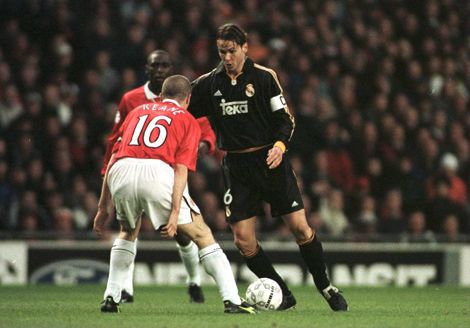
In the 52nd minute of the game Fernando Redondo went on a slalom run down the left hand side of the Old Trafford turf, with Berg in pursuit, there seemingly was nowhere for the Argentine to go as he ran towards the touchline, then in a piece of individual brilliance that is amongst the finest in the history of the competition, Redondo majestically back heels the ball diagonally through the Norwegian’s legs, darts around the defender and regains the ball inches before it’s about to go out of play. He makes inroads to the United goal before squaring the ball to the onrushing Raul who makes it 0-3 to Los Merengues. You could hear a pin drop inside the Theatre of Dreams.

Despite a valiant fight back from the home side inspired by David Beckham, Redondo’s act of sorcery was the coup de grace on a fine Madrid performance, years later Ivan Helguera admitted that they felt some trepidation going into the game. ‘’The truth is, we were pretty scared’’ he recalls. Real were struggling in the league while their opponents were running away with the Premier League title and had trashed West Ham 7-1 the weekend prior to the 1st leg.

Before the first game in Madrid, Amy Lawrence of The Guardian wrote a piece were she described ‘El Principe’ as merely a ‘’volatile, unyielding Argentine midfielder, who, with Hierro, is a big influence inside the Bernabeu. He's great with his elbows: should be an interesting duel with Keane’’. Anyone who had seen the midfielder’s sumptuous talents for Real or Argentina knew this was doing him a gross injustice.

Wednesday, 22 July 2015

Roberto Baggio's Top 5 Free Kicks


‘’He took free kicks like no other.’’ Andrea Pirlo remarked. ‘’I just used to stand there in training and study him for days. I think I learned something in the end.’’

Pirlo was of course talking about Roberto Baggio, one of the bearded geniuses' idols. It can be easy to overlook just how good The Divine Ponytail was at set pieces, given how brilliant he was at more or less everything else on a football pitch.

He's among the best free kick specialists in Serie A history, in the top five surrounded by illustrious names (Zola, Del Piero, Pirlo and Mihajlovic are the other four) - and he inspired two out of the four to boot. That speaks volumes.

I’ve given myself the arduous task of trying to whittle down Baggio’s top five free kicks from all competitions. As someone who has most of his goals imprinted to memory as an ardent lover of the man from Caldogno, there were some goals I’d somehow forgotten about and it was a joy just to sit back on YouTube and marvel at his genius (as if anyone needs an excuse anyways).

The difficult part was deciding which ones to leave out, so I took into consideration things like importance of the goal, who the opponents were and significance of the game.

So enough waffling from me and lets all marvel together at the ponytailed genius. If you felt there were certain goals I left off the list I would like to hear suggestions.

Friday, 17 July 2015

The Day the King of Pop Visited Exeter City

This article originally appeared on TheseFootballTimes


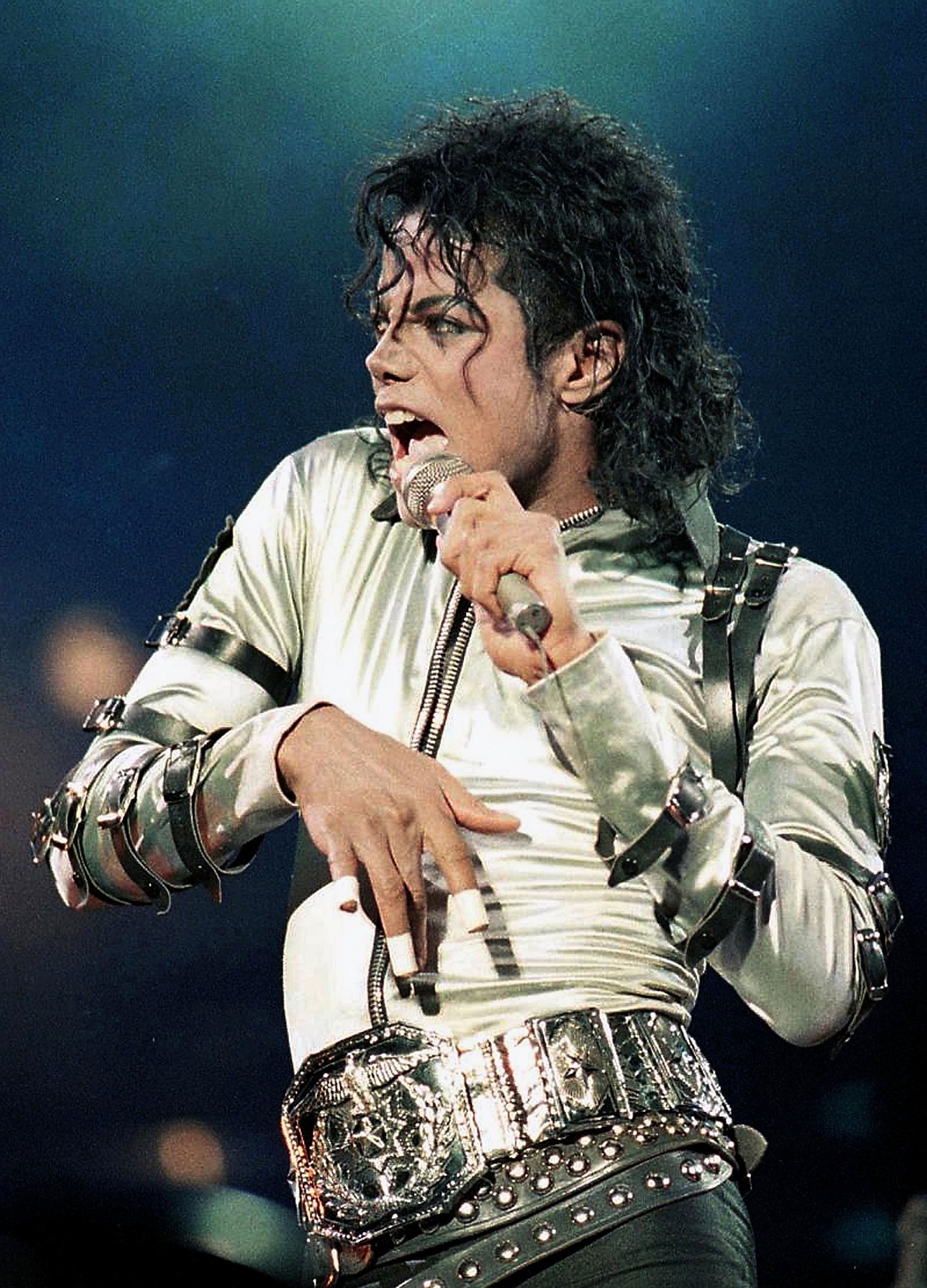
Described by Reuters as “bedlam”, a special train was leaving Paddington Station in London, on June 14th, 2002. The destination was Exeter and the scenes at the station were said to be one of “pure chaos, recalling Beatlemania back in the sixties.” Two hundred fans clamoured on board the train, some paying up to £100 for the privilege of being on the same train as the man. Others managed to sneak on for free amidst the pandemonium. One enthused fan said: “I paid £100 and it was worth every penny. No, he didn’t come through to see us, but just being on the same train was enough.”